
John Keats as a Romantic poet is prominent for his profound role in English Literature. Even though his artistic career was really short, he made a significant impact on romantic poetry with his thoughtful ideas and vivid imagination. and focus on beauty. Unlike many of his contemporary poets who wrote about politics or morals, Keats was drawn to romantic aestheticism and human emotion. This article exemplifies his poetic philosophy, themes, style, and place in literature.
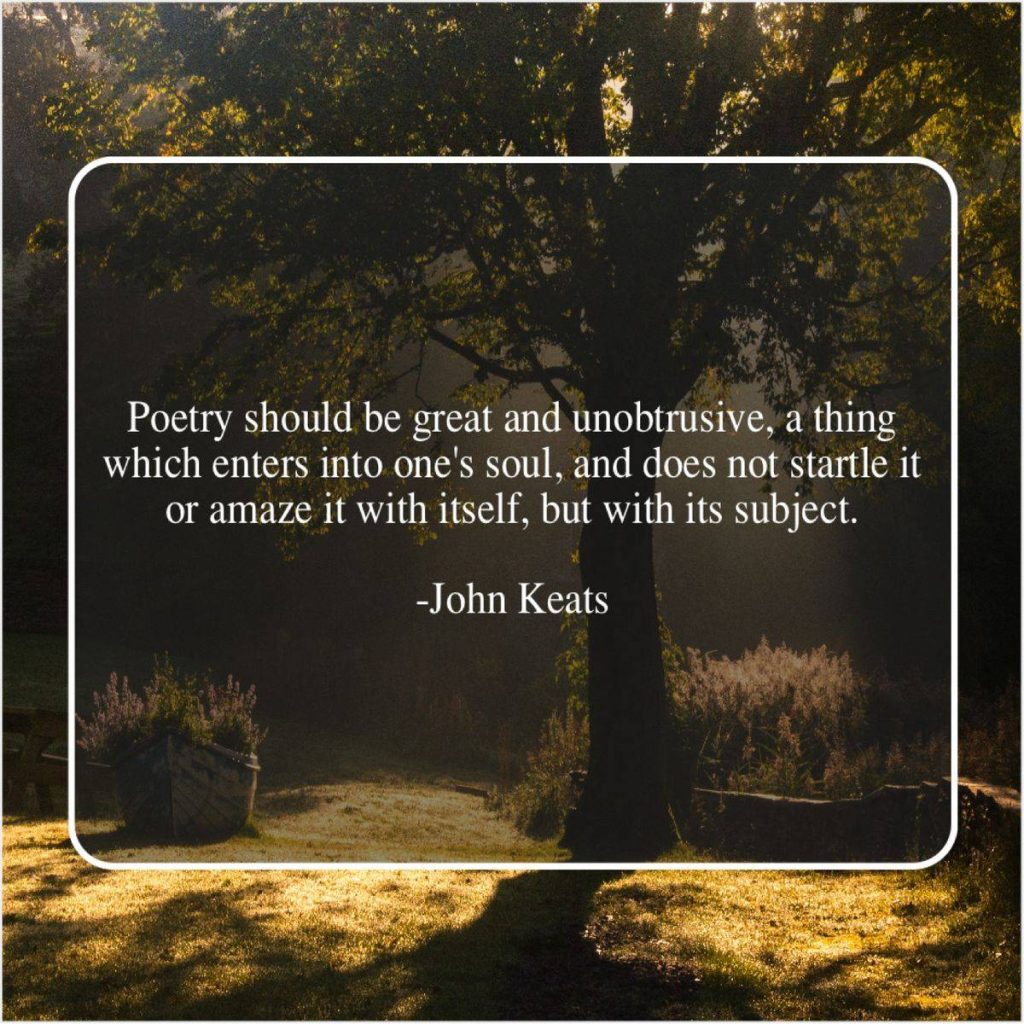
John Keats: Life and Literary Background
John Keats, one of the significant Romantic poets, was born in London in 1795 and was part of the second generation of Romantic poets. He lost his parents in his childhood and later struggled with a deadly illness, tuberculosis. These challenges influenced his poetry, making him more sensitive to pain and misery, mortality, and the transience of life.
Although he faced harsh criticism for his literary works during his time, Keats developed a unique poetic style. His 1819 odes display his imaginative and emotional depth. Today, he stands as a lasting pillar of Romanticism, embodying its spirit through his enduring works. To understand this position, we must look more closely at the Romantic Movement itself and where Keats fits within it.
The Romantic Movement and Keats’s Position
Romanticism began as a reaction to the Neoclassical era’s focus on reason and order and to the changes of the Industrial Revolution. Rather than putting more value on logic and restraint in poetry, Romantic poets put much emphasis on personal experience and imagination. emotion and nature. Romantic poets expressed their emotions through a blend of imagination, revealing their creativity and true selves.
In the Romantic age, many contemporary writers had a different style of writing poetry than Keats. John Keats focused on beauty, imagination, and emotion with sensory details in his poems. His poetry does not aim to teach or change society, but invites readers to experience beauty and emotion. A trait of a Romantic poet is his deep love of beauty. For him, beauty was not just decoration but something meaningful. He believed beauty could comfort people in their suffering and rise above the limits of human life.
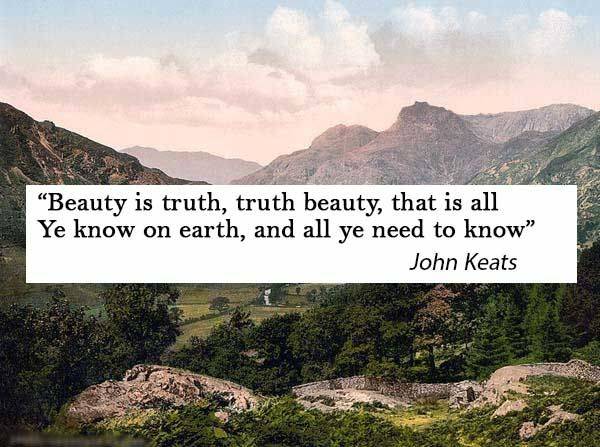
He clearly shows this idea in Ode on a Grecian Urn, where lasting art is compared to the brevity of human life. Keats presents beauty as something eternal, able to keep human feelings alive beyond time and decay. This belief places Keats at the heart of Romantic ideals.
Sensuous Imagery and Emotional Intensity
Keats’s poetry is known for strong sensory language. He appeals to the senses, creating vivid scenes. His descriptions—of sights, sounds, tastes, touches, and smells—heighten emotional depth.
In To Autumn, Keats uses images of nature to create emotional scenes. His sensory details are more than decoration; they embody the Romantic belief that imagination best expresses emotion, deepening the reader’s engagement with the poem.
Nature in Keats’s Romantic Poetry
Nature plays an important role in Keats’s poetry, but he sees it differently from other Romantic poets. Rather than seeing nature as moral or spiritual, Keats values it for its beauty and the emotions it inspires. He finds meaning in natural beauty. In Keats’s poetry, it serves as a powerful symbol. Seasons represent the cyclical flow of existence, flowers symbolize fleeting beauty, and landscapes embody the tension between permanence and change—all reflecting life’s cycles and the inevitability of change.
John Keats, as a Romantic poet, presents nature in “On the Grasshopper and Cricket” as continuous and eternal, suggesting that the music of the natural world never truly ceases. By contrasting seasonal change with underlying permanence, Keats emphasizes nature’s harmony and its power to offer consolation beyond human limitations.
Imagination and the Desire for Escape
Imagination is one of the main themes of Keats’s poetry. He believed it gave people a brief escape from pain and helped them rise above life’s limits.
In Ode to a Nightingale, the speaker wants to escape human suffering by joining the nightingale’s song that transcends time. But Keats understands this escape is only a fleeting moment. This interplay between imagination and reality infuses his Romantic vision with lasting resonance.
Melancholy and the Acceptance of Human Suffering
A key part of Keats’s Romanticism is his belief that joy and sorrow are interconnected. Rather than escaping pain, Keats accepts sadness as a natural and integral part of life. In Ode on Melancholy, he says that true beauty and joy are stronger when we recognize suffering. By accepting emotional complexity, Keats stands apart from poets who seek only perfect happiness.
John Keats as a Romantic poet, shows that life’s shortness makes it even more beautiful, not less. This poem suggests he’s not overly focused on imagination but also seeks resilience in accepting reality.
Negative Capability: Keats’s Philosophical Contribution
Keats’s main philosophical idea is Negative Capability: the ability to accept uncertainty, doubt, and mystery without needing clear answers.
This idea aligns with the Romantic dislike of strict logic and underscores the value of openness to feelings and imagination. Negative Capability makes Keats’s poetry rich, open to many meanings, and deeply human.
Language, Style, and Poetic Form
Keats’s poetry uses simple language and musicality. He chooses words for rhythm and harmony, and uses classical mythology for profoundness. His mastery of the ode allows for reflection and emotional progression.
By blending careful structure with imaginative expression, John Keats, as a Romantic poet, achieves a balance between discipline and emotional freedom. This harmony not only reinforces his artistic reputation but also firmly establishes his enduring legacy within Romantic poetry.
Critical Evaluation of John Keats as a Romantic
Keats faced strong criticism during his life, but today, scholars see his work as a major achievement. The deep emotion, thoughtful ideas, and artistic beauty of his poetry have made him one of the greatest Romantic poets, and his influence continues to inspire readers and writers.
Some critics say Keats’s poetry ignores social or political issues. Others see this focus on universal feelings and beauty as a strength.
Literary Significance of John Keats as a Romantic Poet
John Keats’s influence as a Romantic poet extends far beyond his own time. By focusing on beauty, imagination, and emotional truth, he helped shape later literary movements, such as Victorian aestheticism and modern poetry. People study Keats’s poetry for its thoughtful ideas, strong emotions, and artistic skill. These qualities make him an important figure in English literature.
In conclusion, Romanticism in literature was a path that led every human being to connect with literature. Because human beings are full of passion and emotion. Literature, as an art, becomes a means of communication with the world. John Keats played a remarkable part in the Romantic period, not only expressing his emotional experience but also making it relatable to the readers.
FAQs
Why is John Keats considered a Romantic poet?
John Keats is considered a Romantic poet because his poetry emphasises intense emotion, imagination, the beauty of nature, and individual experience. Like other Romantic poets, he rejected strict classical rules and valued personal feelings and artistic freedom.
What are the main themes in John Keats’s poetry?
The major themes in Keats’s poetry include beauty and truth, love, nature, mortality, imagination, art, and the transience of life. He often explored how fleeting human life contrasts with the permanence of art.
How does nature influence John Keats’s poetry?
Nature plays a central role in Keats’s poetry. He sees nature as a source of inspiration, comfort, and spiritual meaning, and he often uses images from nature to share deep feelings and ideas.
What is Keats’s idea of “Beauty” in Romantic poetry?
Keats believed that beauty has its own truth, famously expressed in “Beauty is truth, truth beauty.” For him, beauty—whether in nature or art—provides lasting meaning in a world that does not last forever.
What is “Negative Capability” in John Keats’s poetry?
“Negative Capability” is Keats’s idea that a poet should accept uncertainty, mystery, and doubt without needing to explain everything logically. This concept strongly reflects Romantic belief in imagination over reason.
What role does imagination play in Keats’s Romantic poetry?
Imagination is essential in Keats’s poetry. He believed that imagination allows humans to transcend reality, experience beauty, and confront pain, loss, and mortality—key ideas of Romanticism.
Why is John Keats still important in English Romantic literature?
John Keats remains important because his poetry represents the purest form of Romantic aestheticism, blending emotional intensity, philosophical depth, and artistic beauty that continues to inspire readers and scholars today.