
William Shakespeare occupies a central place in the history of English literature as both a playwright and poet of the English Renaissance. His works encompass tragedies, comedies, histories, romances, sonnets, and narrative poems, demonstrating an unusual range of dramatic and poetic expression.
The significance of Shakespeare’s Influence on English Literature lies not simply in the fame of individual plays such as Hamlet, Macbeth, or Romeo and Juliet, but in the literary techniques through which Shakespeare explored character, conflict, language, and human experience. His dramatic writing brought together poetry, dialogue, action, and characterization, while his sonnets demonstrated the possibilities of the English lyric tradition. His works have subsequently been edited, printed, translated, performed, adapted, and reinterpreted across different periods and cultures.
Shakespeare’s literary legacy can therefore be understood through several interconnected contributions: dramatic innovation, complex characterization, poetic language, thematic depth, and the continuing adaptability of his works.
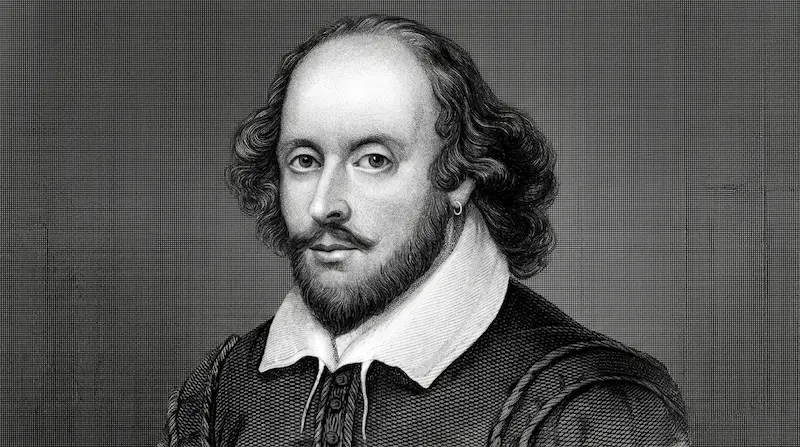
Shakespeare’s Place in English Literature
Shakespeare as a Renaissance Writer
William Shakespeare wrote during the English Renaissance, a period in which English literature was strongly shaped by renewed engagement with classical learning and changing ideas about human experience. Shakespeare’s education and writing reveal connections to classical literature; his works show knowledge of writers such as Virgil, Ovid, and Plutarch.
The Renaissance context is important because Shakespeare’s literary achievement developed within a culture increasingly interested in classical texts, rhetoric, human character, and intellectual inquiry. His plays draw upon earlier stories and historical sources but reshape them through dramatic characterization, poetic language, and theatrical action.
Shakespeare therefore belongs firmly within the literary world of the English Renaissance, while his work also helped establish forms and techniques that later writers could reinterpret.
Shakespeare as Playwright and Poet
Shakespeare’s importance to English literature extends beyond his plays. His legendary works include dramatic genres such as tragedy, comedy, history, and romance, as well as sonnets and longer narrative poems. The First Folio of 1623 famously organized many of his plays under the categories of comedies, histories, and tragedies.
His poetry also forms an important part of his literary achievement. Venus and Adonis and Lucrece were published during his lifetime, while the Sonnets were first published collectively in 1609.
This combination of dramatic and poetic writing helps explain why Shakespeare’s influence belongs to the broader history of English literature rather than to theatre alone.
Shakespeare’s Influence on English Drama
Shakespeare’s contribution to English drama is one of the most important dimensions of his literary legacy. His plays combine theatrical action, poetic language, dramatic dialogue, characterization, conflict, and shifts between serious and comic material.
Development of Shakespearean Drama
Shakespeare did not invent English drama, blank verse, or tragedy. He worked within existing theatrical traditions and transformed materials, genres, and conventions available to Renaissance playwrights. Early modern London had a substantial theatrical culture, with numerous playwrights and public theatres operating alongside Shakespeare.
What distinguishes Shakespeare’s dramatic practice is the flexibility with which he combines different elements of drama. Characters can reveal themselves through dialogue, soliloquy, interaction, action, and conflict. Verse can carry philosophical reflection or emotional intensity, while prose can produce different social and dramatic effects.
Shakespeare also frequently brings comic and serious elements into the same dramatic world. This flexibility allows his plays to move between private emotion and larger questions of politics, morality, identity, and social order.
Shakespeare’s Influence on Tragedy
Shakespeare’s tragedies provide particularly powerful examples of his contribution to dramatic characterization and conflict. Hamlet, Macbeth, Othello, and King Lear place individual characters in situations where personal desire, moral uncertainty, political circumstances, and external pressures interact.
In Macbeth, ambition becomes inseparable from political power and moral consequences. In Othello, jealousy and manipulation contribute to a tragic conflict in which perception and trust become central. Hamlet explores uncertainty, revenge, identity, and the difficulty of translating thought into action. King Lear examines authority, family relationships, suffering, and the consequences of misjudgment.
These tragedies matter not simply because they contain memorable characters. Shakespeare constructs dramatic situations in which character and conflict develop together. This approach helped make psychological and moral complexity central to the experience of English tragedy.
Shakespeare’s Influence on Comedy and History
Shakespeare’s comedies also demonstrate his ability to develop dramatic conventions through language, character, and social interaction. Mistaken identities, romantic conflicts, disguises, wit, and misunderstandings often generate comedy while also letting Shakespeare explore relationships and social expectations.
His history plays similarly combine dramatic storytelling with questions of kingship, political legitimacy, authority, rebellion, and national history. Rather than presenting historical material as a straightforward chronicle, Shakespeare reshapes it for the stage through individual characters and dramatic conflict.
His contribution to English drama consequently lies not in creating these genres from nothing, but in expanding their expressive possibilities.
Shakespeare’s Influence on English Poetry
Shakespeare’s literary influence also extends deeply into English poetry. His narrative poems and sonnets demonstrate his ability to work within established poetic forms while giving them distinctive dramatic and rhetorical energy.
Shakespeare as a Poet
Venus and Adonis and Lucrece were Shakespeare’s two long narrative poems published in 1593 and 1594. Both were connected with classical literary traditions and were successful in their own time. Venus and Adonis, for example, went through multiple editions during Shakespeare’s lifetime.
These poems demonstrate Shakespeare’s interest in imagery, narrative voice, rhetorical development, figurative language, and classical subject matter. Their importance to his literary legacy is significant because they show that his poetic ability was not confined to dramatic dialogue.
Shakespeare’s Influence Through the Sonnets
The Shakespearean sonnet became one of the most recognizable forms associated with English poetry. A conventional Shakespearean sonnet consists of fourteen lines, generally using iambic pentameter and the rhyme scheme ABAB CDCD EFEF GG.
Shakespeare’s Sonnets explore subjects including love, beauty, time, change, mortality, desire, and the relationship between physical existence and poetic remembrance. The structure often lets an argument or emotional movement develop across three quatrains before reaching a concluding couplet.
This combination of formal structure and intellectual development helped demonstrate how the sonnet could become a vehicle for complex reflection rather than merely conventional expressions of romantic love.
Shakespeare’s Poetic Language
Shakespeare’s poetry is characterized by dense imagery, metaphor, personification, wordplay, rhetorical devices, and rhythmic variation. His use of iambic pentameter is particularly flexible: although the meter provides an underlying structure, Shakespeare can vary stresses and rhythms to reflect meaning and emphasis.
The interaction between formal control and linguistic flexibility is central to Shakespeare’s contribution to English poetic expression.
Shakespeare’s Influence on Characterization
One of Shakespeare’s most significant contributions to English literature is his treatment of character. His major figures are rarely defined by a single quality. Instead, they frequently develop through contradictions, competing desires, uncertainty, and changing relationships.
Complex and Multifaceted Characters
Hamlet, Macbeth, Lady Macbeth, Othello, and King Lear demonstrate different forms of dramatic complexity.
Hamlet’s intellectual reflection interacts with his desire for revenge. Macbeth’s ambition develops alongside fear, guilt, and moral conflict. Lady Macbeth initially appears determined and forceful, yet her relationship with guilt and responsibility complicates that impression. Othello’s authority and confidence are undermined by jealousy and manipulated perception. Lear’s understanding of authority, family, and responsibility changes through suffering.
These characters matter because Shakespeare makes internal conflict dramatically visible. Characters reveal themselves through what they say, what they do, what they conceal, and how they respond to other people.
Shakespeare and the Representation of Human Nature
Shakespeare repeatedly dramatizes experiences such as ambition, jealousy, love, betrayal, guilt, grief, power, identity, and conflict. These subjects are not presented merely as abstract themes; they become dramatic forces that shape individual decisions.
This relationship between character and human conflict became central to Shakespeare’s literary legacy. His characters can be studied simultaneously as dramatic figures, psychological constructions, rhetorical voices, and participants in social and political conflicts.
The Universality of Shakespearean Characters
The continuing interpretation of Shakespeare’s characters is closely connected with the adaptability of his works. Shakespeare’s plays have been repeatedly staged and reshaped in different historical and cultural contexts, allowing directors, actors, scholars, and audiences to approach familiar characters from new perspectives.
This does not mean that Shakespeare’s characters have one fixed meaning. Their continuing significance partly comes from the fact that they support competing interpretations.
Shakespeare’s Influence on English Language and Literary Style
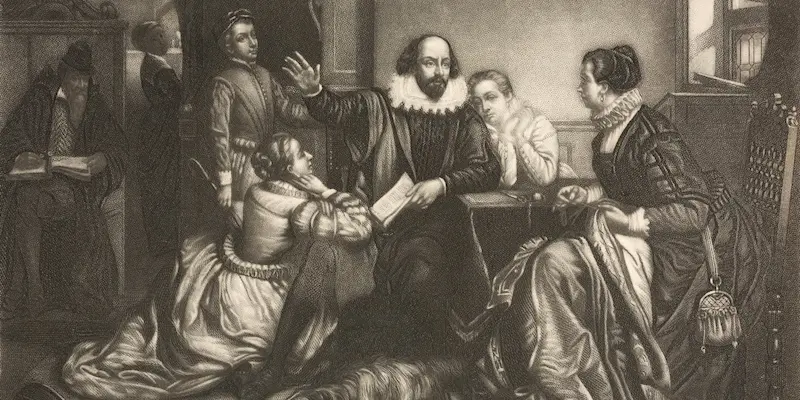
Shakespeare’s influence on English literary style is closely connected with his extraordinary flexibility as a writer. His language can move from elevated poetic expression to conversational prose, from elaborate rhetorical patterns to concise dramatic exchanges.
Shakespeare’s Use of Language
Shakespeare makes extensive use of metaphor, imagery, wordplay, symbolism, rhetorical questions, contrasts, and other literary devices. These techniques do more than decorate the language: they help establish character, develop arguments, intensify conflict, and shape dramatic atmosphere.
His dialogue matters because language often becomes action. Characters persuade, deceive, threaten, question, confess, manipulate, and conceal through speech.
Blank Verse and Shakespearean Drama
Blank verse is unrhymed iambic pentameter. It became an important form of English dramatic verse before and during Shakespeare’s career, and Shakespeare used it extensively.
Iambic pentameter provides a rhythmic framework, but Shakespeare frequently varies that framework. The result can make dramatic speech sound both formally structured and responsive to a scene’s emotional or intellectual circumstances.
Shakespeare also used prose alongside verse. The contrast between prose and verse can shape characterization, social distinction, comic effects, and shifts in dramatic register.
Shakespeare’s Literary Style
A distinctive feature of Shakespeare’s style is the interaction between poetry and drama. His imagery and figurative language contribute simultaneously to literary beauty and dramatic meaning.
His writing can therefore operate on several levels at once: a speech can advance the plot, reveal character, develop a metaphorical pattern, and raise a philosophical question.
Claims that Shakespeare “invented” large numbers of English words should be treated cautiously. His works are important evidence for the history and development of English vocabulary, but establishing that Shakespeare personally coined a particular word requires more evidence than merely finding its earliest surviving appearance in one of his works.
Shakespeare’s Influence on Literary Themes
Shakespeare’s treatment of major human and social concerns is another reason his work has remained central to literary study. His influence comes not only from choosing universal themes; it also comes from the complexity with which he dramatizes them.
Love and Relationships
Romeo and Juliet places romantic love within a world shaped by family conflict, social division, and violence. Othello explores love alongside trust, jealousy, manipulation, and power, while the Sonnets approach love and desire through changing perspectives on beauty, time, attachment, and mortality.
Shakespeare therefore presents relationships not as isolated emotions but as forces shaped by social circumstances and individual choices.
Ambition and Power
Macbeth offers one of Shakespeare’s most concentrated examinations of ambition and political power. Personal desire becomes connected with kingship, violence, moral responsibility, and fear.
Richard III similarly explores political ambition through a protagonist who actively seeks power and manipulates relationships to achieve it.
These works demonstrate Shakespeare’s ability to turn political and moral questions into dramatic conflicts between individuals.
Appearance vs. Reality
The tension between appearance and reality recurs throughout Shakespeare’s drama. In Hamlet, characters frequently conceal intentions and perform roles. In Macbeth, deceptive appearances become central to the play’s treatment of trust and ambition. In Othello, manipulated appearances have devastating consequences because characters struggle to distinguish truth from constructed evidence.
This dramatic concern with perception, deception, and interpretation gives Shakespeare’s works considerable scope for literary analysis.
Mortality, Time, and Human Existence
The passage of time and awareness of mortality are especially prominent in Shakespeare’s poetry and tragedies. The Sonnets repeatedly consider aging, change, beauty, and the possibility of poetic remembrance, while the tragedies explore death and human vulnerability through dramatic action.
The result is a literary treatment of mortality that connects personal experience with larger philosophical questions.
Individuality and Human Conflict
Shakespeare’s characters frequently stand between individual desire and social expectations. Their conflicts may involve family, political authority, love, duty, reputation, or personal identity.
This emphasis on individuals confronting competing pressures helps explain why Shakespeare’s works have generated such extensive critical interpretation.
Shakespeare’s Influence on Later Writers and Literature
Shakespeare’s influence did not end with the early modern theatre. His works continued to be printed, edited, studied, translated, performed, and adapted after his death. The publication history itself demonstrates the durability of his literary presence: the 1623 First Folio preserved eighteen plays that had not previously appeared in print and might otherwise have been lost.
Influence on English Writers
Later English writers engaged with Shakespeare in different ways. Some admired or studied his works; others adapted, criticized, reinterpreted, or reacted against particular aspects of his writing.
However, it is important to distinguish genuine literary influence from simple chronological succession. A writer who lived after Shakespeare was not necessarily influenced by him in a demonstrable sense. Claims about direct influence should therefore be based on textual evidence, documented engagement, adaptation, correspondence, criticism, or other reliable evidence.
Shakespeare’s influence on later literature is best understood as a network of engagement rather than as a simple chain in which one writer mechanically produces another.
Shakespeare’s Influence on Modern Drama
Modern theatre has repeatedly transformed Shakespearean material. Directors and theatre practitioners have adapted his plays to address the concerns of their own historical and cultural contexts. His works have also been transformed into films, operas, musicals, and other artistic forms.
Adaptation is significant because it demonstrates that Shakespeare’s plots and characters can function as material for new artistic interpretations rather than remaining confined to their original theatrical circumstances.
Shakespeare’s Influence Beyond England
Shakespeare’s literary presence has also extended through translation, international performance, adaptation, and scholarship. His literary masterpieces have been translated into numerous languages and continue to be performed internationally.
This international afterlife has made Shakespeare part of literary cultures beyond the English Renaissance. At the same time, different cultures can reinterpret his works according to their own theatrical traditions, historical experiences, and literary concerns.
Why Shakespeare Remains Important in English Literature
Shakespeare remains important to English literature because several aspects of his writing operate together rather than independently.
First, his dramatic writing demonstrates considerable flexibility in combining action, dialogue, poetry, characterization, and conflict. Second, his major characters provide complex material for examining psychological, moral, social, and political questions. Third, his poetic language demonstrates how imagery, metaphor, rhetoric, and rhythm can operate within dramatic as well as lyric forms.
His themes also contribute to his continuing literary significance. Love, ambition, power, jealousy, mortality, identity, and conflict appear across different works but rarely receive simplistic treatment.
Most importantly, Shakespeare’s works have remained adaptable. They have continued to exist through printed editions, theatrical performances, translations, adaptations, classroom study, and literary criticism. The Folger Shakespeare Library documents a performance tradition in which practitioners worldwide have repeatedly reshaped Shakespeare’s works to speak to different times and places.
His importance to English literature therefore rests not on a single achievement but on the interplay of dramatic form, poetic language, characterization, thematic complexity, and subsequent literary engagement.
Shakespeare’s Literary Legacy
Shakespeare’s literary legacy begins within the English Renaissance but extends far beyond it. As a playwright, he developed the possibilities of tragedy, comedy, history, and romance through an unusually close relationship between dramatic action and language. As a poet, he contributed significantly to the English narrative poem and sonnet traditions.
His characterization remains equally important. Figures such as Hamlet, Macbeth, Othello, and Lear are constructed through conflicts that connect personal choices with broader moral, political, and social pressures. His language similarly demonstrates how poetry can function as an essential component of dramatic action.
Yet Shakespeare’s influence is not simply about preserving an old literary tradition. His works have repeatedly been edited, performed, translated, adapted, taught, and reinterpreted.
The enduring significance of Shakespeare’s Influence on English Literature therefore lies in the relationship between innovation and reinterpretation: Shakespeare transformed the literary possibilities available to him, and subsequent generations have continually transformed how his works are read and performed.